


What’s the actual difference?
A patio is a paved surface laid at ground level on a compacted sub-base, typically using natural stone, porcelain tiles, or concrete slabs set in mortar. It sits flush with the ground and becomes a permanent part of the landscape.
Decking is a raised or ground-level platform built on a timber or metal subframe (joists), using either softwood, hardwood, or composite boards. Because it’s built on a framework rather than directly on the ground, it can be elevated, stepped, or angled to suit the space.
Both create usable outdoor living areas. The right choice depends on your garden’s shape, your budget, how much maintenance you’re willing to do, and what you want the space to feel like.
Cost comparison: patio vs decking in 2026
Let’s get straight to what most people want to know. These figures are based on current UK supply-and-install prices for a typical 20m2 area, which is roughly the size of a double bedroom.

How much does a patio cost?
A professionally installed patio in the UK costs between £65 and £160 per square metre, depending on the material. For a 20m2 area, that puts you in the range of £1,300 to £3,200.
Concrete slabs sit at the cheaper end, around £20 to £25 per m2 for materials alone. Porcelain tiles run £22 to £40 per m2. Natural sandstone sits between £30 and £50 per m2, while premium Indian sandstone or granite can push past £100 per m2. Labour and groundwork add another £35 to £80 per m2 on top.
How much does decking cost?
Softwood decking costs around £70 to £90 per m2 installed. Composite decking runs £80 to £120 per m2. Hardwood decking is the most expensive at £110 to £130 per m2. For a 20m2 deck, expect to pay between £1,400 and £2,600.
So the upfront costs are broadly similar. A basic softwood deck and a basic concrete patio are comparable. The gap only widens when you move toward premium materials on either side.
The cost most people forget: maintenance over 10 to 25 years
This is where the comparison changes significantly. A timber deck needs annual treatment. Oiling or staining costs around £50 to £100 per year, and over 25 years that adds up to roughly £2,400 in maintenance alone. Factor in that a softwood deck may only last 10 to 15 years before needing replacement, and you could be paying twice.
Composite decking needs very little beyond an annual wash, costing roughly £475 over 25 years in cleaning products and the occasional repair. It also lasts 25 years or more, with most manufacturers offering guarantees of 10 to 25 years.
A stone or porcelain patio, meanwhile, needs an occasional jet wash and perhaps re-pointing every five to ten years (around £175 to £360 per treatment). Natural stone can last 30 to 50 years with basic care, and porcelain even longer. When you spread the total cost across the lifespan, a patio is almost always cheaper per year of use.
Pros and cons of a patio

Where patios win
Durability is the biggest advantage. A well-laid patio on a properly prepared sub-base will outlast almost any decking option by a comfortable margin. Stone doesn’t rot, warp, or need oiling. It handles heavy garden furniture, hot tubs, and foot traffic without complaint.
Patios are also low maintenance in a way that decking simply isn’t. You’ll jet wash it once or twice a year and pull the odd weed from between the joints. That’s about it. No annual staining, no anti-slip treatments, no checking for soft spots.
The range of materials is enormous. From budget concrete slabs to hand-cut sandstone, porcelain that mimics timber, or dark slate that changes colour in the rain, there’s a patio material for every style and budget. And because the surface is solid and level, it works well for dining tables, pushchairs, wheelchairs, and anyone with mobility concerns.
Where patios struggle
Patios need level ground. If your garden slopes, preparing the site means excavation, retaining walls, or terracing, and that adds cost quickly. Installation takes longer too, typically three to five days for a 20m2 area once the sub-base is prepared.
Light-coloured stone and porcelain can become very hot in direct summer sun, which catches people off guard. Dark stone absorbs even more heat. And while frost rarely damages quality stone, cheaper concrete slabs can crack after a few harsh Scottish winters.
Pros and cons of decking
Where decking wins
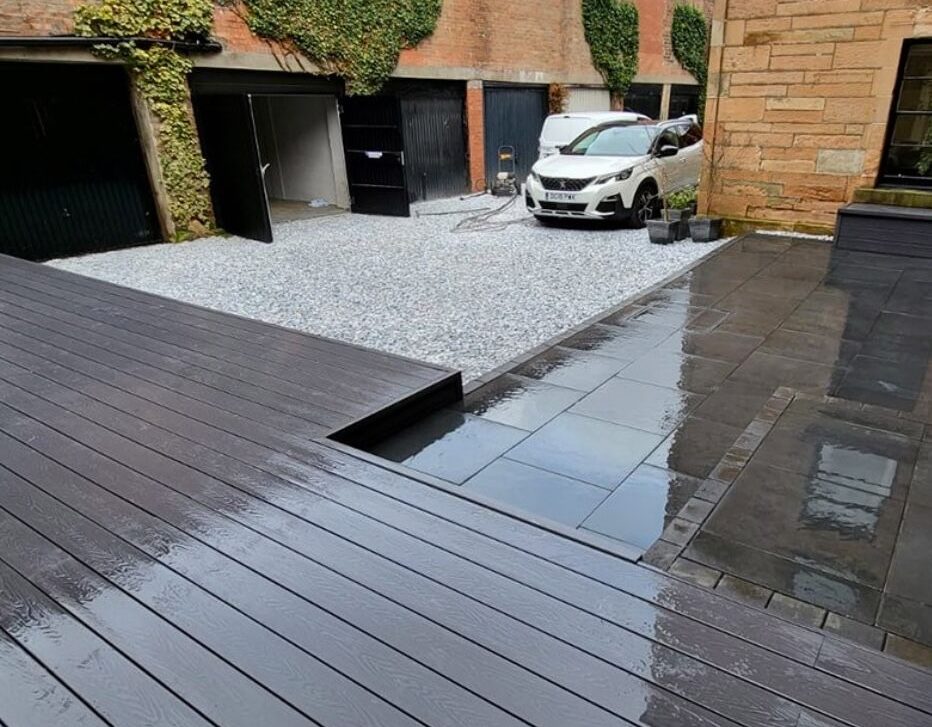
Decking handles awkward gardens beautifully. If your outdoor space slopes, drops away, or has multiple levels, a decked platform on a subframe can create a flat, usable area without the cost of excavating and levelling the ground. Stepped and tiered designs work particularly well on hillside plots, which are common across Glasgow and Central Scotland.
Installation is faster. A professional team can build a 20m2 deck in one to two days, compared to three to five for a patio. If you need the job done quickly, perhaps before an event or ahead of selling your property, decking gets you there sooner.
Composite decking now comes in a wide range of colours and textures, and modern boards are far more convincing than the plastic-looking options from ten years ago. Timber decking has a natural warmth and feel that many homeowners prefer to cold stone, especially in bare feet during summer.
There’s also a property value argument. Research suggests that decking can increase a home’s value by 5 to 10 percent. On a £250,000 property, that could mean up to £25,000 in added value, with timber decking returning around 80% of its cost and composite around 70%.
Where decking struggles
Maintenance is the main drawback, particularly with timber. Softwood decking needs oiling or staining every year, and even with regular treatment, it’s likely to need replacing after 10 to 15 years. Skip a year or two and you’ll find warping, grey discolouration, and soft spots where moisture has crept in.
Slipperiness is a genuine concern in Scotland’s wet climate. Timber decking grows algae and moss quickly, especially on north-facing surfaces or shaded areas, and it becomes treacherous in winter. Anti-slip strips and regular cleaning help, but they’re ongoing tasks. Composite decking performs better on this front, but it’s not immune.
Weight limits can be an issue too. Standard residential decking supports normal furniture and foot traffic, but if you’re thinking about a hot tub or heavy planters, the subframe needs reinforcement. With a patio, you simply lay the slab and put whatever you like on it.
Which handles Scotland’s weather better?
This matters more than most comparison articles acknowledge. Scotland gets around 1,500mm of rainfall per year in the west, roughly double the south of England. Frost, ice, and short drying windows between rain are the norm from October to March.
Timber decking takes the worst of this. It stays damp for longer, encourages moss and algae growth, and the freeze-thaw cycle accelerates rot. If your garden faces north or is shaded by trees or buildings, timber decking can feel perpetually damp from autumn through to spring.
Composite decking handles moisture better since it doesn’t absorb water in the same way, but it can still grow algae on the surface and become slippery without regular cleaning.
A well-laid patio drains quickly (assuming the correct fall is built into the sub-base), dries faster, and doesn’t encourage algae growth to the same extent. Porcelain tiles are particularly weather-resistant since they absorb almost no water, which also means frost damage is extremely rare. Natural stone handles Scottish weather well too, though softer stones like limestone may show weathering over decades.
For west-coast and central Scotland gardens, a patio is generally the more practical choice on weather grounds alone. Decking can work well on south-facing, well-ventilated spots where it dries out between showers.
What about sloping or uneven gardens?
This is where decking has a clear advantage. Building a level platform on a subframe over sloping ground is straightforward for an experienced installer. You can create stepped levels, wraparound designs, or a single raised platform without touching the ground beneath.
Installing a patio on a slope means excavating, building retaining walls, and creating a level terrace. It’s entirely possible, and the result can be stunning, but the groundwork adds cost and time. For steep slopes, the additional work can double the price of a standard patio installation.
If your garden has a gentle slope, either option works. If it drops away sharply, decking is usually the more practical and affordable solution.
Planning permission and regulations
Patios generally don’t need planning permission because they sit at ground level. The main consideration is drainage: if your patio covers a large area, you may need to use permeable materials or install drainage channels to prevent surface water runoff affecting neighbouring properties.
Decking has a stricter threshold. If any part of the deck rises more than 300mm (30cm) above the existing ground level, you’ll need to apply for planning permission. You also can’t cover more than 50% of your garden area with decking and other structures combined. Properties in conservation areas or listed buildings always need permission, regardless of height.
Your installer should advise on this before work starts. We check planning requirements as part of every garden design consultation because it’s far easier to design within the rules from the start than to deal with enforcement notices afterwards.
Can you use both in the same garden?
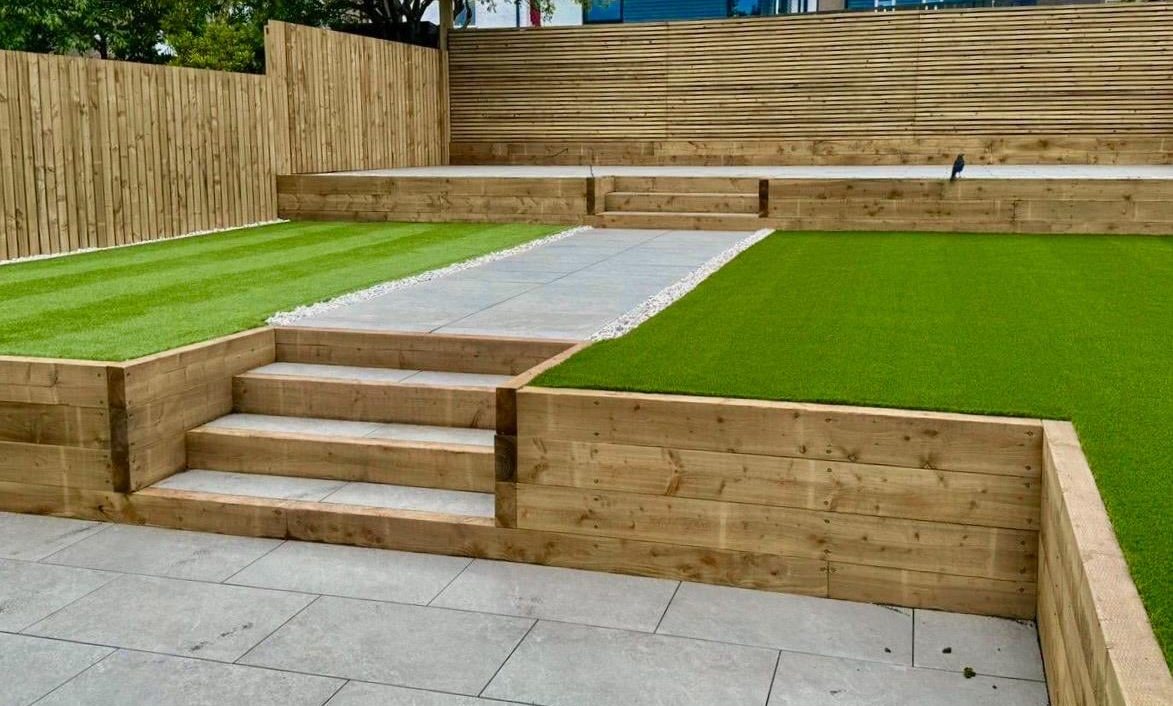
Yes, and it’s often the best solution. We design plenty of gardens that use a stone patio for the main dining and entertaining area (where weight-bearing, durability, and easy cleaning matter most) with a raised composite deck in another section for lounging, reading, or catching the evening sun.
Combining materials creates visual interest and lets you play with different levels, textures, and zones. A patio at ground level flowing into a raised deck at the back of the garden, perhaps bordered by artificial grass or planting beds, is a design approach that makes a modest garden feel much larger than it is.
The key is planning the transition between surfaces properly. A sudden change in level without steps or a clear edge is a trip hazard. A well-designed transition using matching materials, integrated lighting, and planting makes the two surfaces feel intentional rather than bolted together.
Sustainability: which is the greener choice?
This depends on the specific materials. Locally quarried Scottish stone has a lower carbon footprint than Indian sandstone shipped halfway around the world. FSC-certified timber from managed forests is arguably more sustainable than concrete manufacturing, which produces significant CO2. Composite decking uses recycled plastics and wood fibres, diverting waste from landfill, but it’s not recyclable itself at end of life.
Porcelain tiles require high-temperature firing during manufacture but last so long that their lifetime environmental impact per year is low. Concrete slabs have a moderate carbon footprint but are widely recyclable.
If sustainability matters to you, ask your landscaper where the materials come from. Locally sourced, responsibly certified, and long-lasting will always be the greenest combination, regardless of whether you choose stone or timber.
Which should you choose?
After installing both across hundreds of gardens, here’s how we’d summarise the decision:
Choose a patio if your garden is level or gently sloping, you want minimal ongoing maintenance, you plan to use the space for dining and entertaining with heavy furniture, you’re thinking long-term (20+ years), or you live in a wet, north-facing spot where timber would struggle.
Choose decking if your garden slopes significantly, you want a warm, natural feel underfoot, you’re working to a tighter budget for a quick transformation, you want to add property value before selling, or you’re happy to stay on top of annual maintenance (or invest in composite).
Choose both if you want a garden that looks professionally designed with distinct zones for different activities. Many of our favourite landscaping projects across Glasgow and Central Scotland combine both materials, and they’re the gardens our clients end up using the most.
Frequently asked questions
Is a patio cheaper than decking?
At the budget end, they’re similar. A basic concrete patio and a softwood deck both cost around £1,300 to £1,500 for a 20m2 area. But over the long term, patios are cheaper because they last longer and need less maintenance. A timber deck could cost you twice if it needs replacing after 10 to 15 years.
Does decking add value to a house?
Research suggests decking can add 5 to 10 percent to your property value. A well-designed outdoor living space appeals to buyers, and decking photographs well in property listings. That said, a beautifully laid stone patio adds value too, and it won’t raise questions about maintenance or condition during a survey.
Is decking slippery in winter?
Timber decking can be very slippery when wet, particularly if algae or moss has built up. Anti-slip strips help, and regular pressure washing keeps the surface safer. Composite decking with textured surfaces performs better but still needs attention. In Scotland’s climate, this is one of the strongest arguments in favour of a patio.
Do you need planning permission for decking?
Only if the deck is more than 300mm above ground level, or if it covers more than 50% of your garden. Listed buildings and conservation areas have stricter rules. Patios at ground level don’t usually need planning permission.
Can you put a hot tub on decking?
You can, but the subframe needs to be specifically designed to handle the weight. A filled hot tub with people in it can weigh over 1,500kg. Standard decking joists won’t support that. A patio is naturally strong enough, which makes it the simpler choice if a hot tub is in your plans.
How long does a patio last?
Natural stone patios last 30 to 50 years or more with basic maintenance. Porcelain can last even longer. Concrete slabs are less durable but still manage 15 to 25 years depending on quality. By comparison, timber decking lasts 10 to 15 years and composite decking lasts 25 years or more.
Ready to talk about your garden?
Whether you’re leaning toward a patio, decking, or a combination of both, we can help you work out what suits your space, your budget, and how you actually want to use your garden. We’re a team of qualified landscape architects and installers based in Cambuslang, and we work across Glasgow, Lanarkshire, and the whole of Scotland.
Get in touch for a free garden consultation or call us on 07946 322717 to talk through your ideas.